


Booj Review: Break the Paycheck to Paycheck Loop Fast
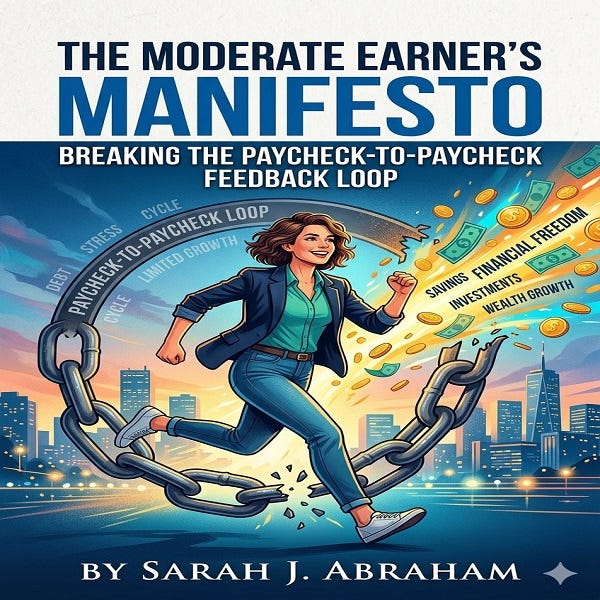
review booj: The Moderate Earner’s Manifesto Breaking the Paycheck to Paycheck Feedback Loop,
Target Audience: Employees with moderate salaries
Breaking Free: Why Moderate Earners Struggle Most
Earning $65,000 a year used to be the gold standard for a comfortable, middle-class existence. Today, for many professionals, that figure represents a frustrating financial purgatory. You earn too much to qualify for any form of social assistance, yet you earn too little to absorb the rising costs of housing, insurance, and groceries without feeling the squeeze.
This is the “moderate income trap.” It is a specific economic zone where your salary covers your survival but fails to fund your future. When you are stuck in this loop, the dream of financial freedom feels like a moving target that drifts further away with every rent hike.
The Story of Mark: The $5,400 Mirage
Take Mark, a 34-year-old project coordinator living in an average-cost city. Mark earns a gross monthly salary of $5,400. After federal and state taxes, health insurance premiums, and a modest 3% 401k contribution, his actual take-home pay is approximately $3,950.
His fixed costs tell a restrictive story:
- Rent: $1,650
- Car Payment & Insurance: $550
- Student Loans: $350
- Utilities & Internet: $250
- Groceries: $500
Before Mark even buys a cup of coffee or replaces a worn-out pair of shoes, $3,300 is gone. He is left with $650 for everything else. One unexpected dental bill or a $400 car repair doesn’t just “tighten the belt” — it forces him to use a credit card, effectively starting the paycheck to paycheck cycle all over again.
The Anatomy of Budget Burnout
Moderate earners often experience a unique psychological phenomenon known as budget burnout. Unlike those in extreme poverty who are in survival mode, or high earners who have a margin for error, moderate earners spend 100% of their mental energy tracking every cent just to stay level.
This constant vigilance leads to decision fatigue. When you have to calculate the cost of a brand-name detergent versus a generic one every single week, your brain eventually rebels. This rebellion usually manifests as “revenge spending” — small, impulsive purchases that provide a temporary hit of dopamine but destroy your monthly progress.
Why the “Middle” Feels So Heavy
The struggle isn’t a result of poor character; it is a result of specific financial stressors that target moderate income households:
- The “Too Much to Qualify” Gap: You pay full price for healthcare, childcare, and education. There are no sliding scales for the middle class, meaning a $2,000 emergency hits you harder than it hits someone with a safety net or someone with a high-disposable income.
- Stagnant Wage Compression: While entry-level wages have risen sharply in many sectors, mid-tier professional salaries have not kept pace with the 19.2% cumulative inflation seen over the last few years [¹].
- The Professional Tax: Maintaining a moderate-income job often requires “hidden” costs: a reliable vehicle, professional attire, and living within commuting distance of urban hubs where housing is at a premium.
- The Credit Dependence: Because the margin for savings is so thin, moderate earners often use credit cards as a secondary emergency fund. This creates a high-interest debt trap that eats into future earnings.
Identifying the Breakpoint
To break the loop, you must first identify your “Cash Flow Gap.” This is the exact dollar amount between your unavoidable survival costs and your take-home pay. For most moderate earners, this gap is less than $400.
If your gap is this narrow, traditional “frugality” (like skipping lattes) won’t save you. You cannot “coupon” your way out of a $1,600 rent payment. Breaking free requires a structural shift in how you manage the money you already have — moving from reactive spending to proactive cash-flow systems.
[¹]: Pro-Tip: According to the Bureau of Labor Statistics, “real” earnings (wages adjusted for inflation) have remained nearly flat for the middle quintile of earners since 2021, meaning you are likely working harder for the same purchasing power you had three years ago.
The Booj Method: Analyzing the Feedback Loop
Most employees earning between $50,000 and $90,000 fall into a mathematical trap known as the neutral economic feedback loop. In this cycle, every dollar of increased income is met with a corresponding increase in “necessary” friction — higher taxes, convenience costs, and lifestyle inflation. The Booj Method suggests that wealth isn’t a byproduct of your salary, but a result of breaking this specific loop through a radical shift in your saving ratio.
The Booj manifesto analysis posits that the wealth gap is not merely a distance between the rich and the poor, but a difference in the “velocity of capital.” While traditional budgeting focuses on restricting joy, the Booj Method focuses on the momentum of every cent. It treats your bank account as a closed-circuit system where leaks must be plugged to build internal pressure.
The Mathematics of the Saving Ratio
Consider Mark, a project coordinator earning $62,000 a year. For three years, Mark followed a traditional “50/30/20” budget. He felt successful because he saved 20%, yet his net worth barely moved due to inflation and unexpected repairs. He was in a “static loop.”
When Mark applied the Booj Method, he stopped looking at his expenses and started obsessing over his saving ratio as a performance metric. By identifying “ghost subscriptions” and optimizing his tax withholding, he pushed his ratio to 35% without changing his standard of living. This 15% shift didn’t just add a few dollars; it shortened his “time to financial floor” by nearly seven years. [¹]
Traditional Budgeting vs. The Booj Method
To understand why the Booj philosophy works for moderate earners, we must contrast it with the methods that have failed the middle class for decades.
Feature
Traditional Budgeting
The Booj Method
Primary Goal
Expense Management
Feedback Loop Optimization
View of Debt
Something to “Pay Off”
A leak in the pressure system
Focus Metric
Monthly Cash Flow
The Saving Ratio
Behavioral Trigger
Restriction & Guilt
Capital Velocity & Momentum
Growth Type
Linear / Incremental
Exponential / Compounded
Deconstructing the Economic Feedback Loop
The economic feedback loop is the invisible force that keeps moderate earners stationary. When you earn more, you typically buy “time-savers” — prepared meals, faster internet, or a more reliable car. While logical, these choices increase your “burn rate,” ensuring that your wealth gap remains constant regardless of your raises.
The Booj Method interrupts this by treating every dollar as a “worker.” In the Booj framework, you don’t spend what is left after saving; you spend what is left after your “wealth momentum” requirements are met. This is a subtle but aggressive psychological pivot. It moves the user from a defensive posture (protecting money) to an offensive one (deploying capital).
Your Booj Action Checklist: 48-Hour Blueprint
To implement this analysis into your own life, follow this tactical sequence immediately:
- Calculate Your True Ratio: Divide your total monthly investments (not just cash savings) by your gross income. If this is below 25%, your loop is currently leaking capital.
- Identify the “Ghost Friction”: Audit your last 30 days of transactions for “convenience taxes.” These are small $5-$15 purchases made solely because of poor planning.
- Set the Automated Floor: Move your saving ratio target to a separate account the same hour your paycheck hits. Do not wait until the end of the month.
- Analyze the Manifesto Pivot: Shift your mindset from “What can I afford?” to “What does this purchase do to my capital velocity?” [²]
Moderate earners often feel they lack the “dry powder” to build significant wealth. However, the Booj Method proves that by tightening the economic feedback loop, an average salary can outperform a high salary that suffers from high friction. It is not about the size of the engine, but the efficiency of the transmission.
[¹]: Pro-Tip: The “Financial Floor” is the amount of liquid capital required to cover 12 months of living expenses. Reaching this floor is the first stage of the Booj Method. [²]: Research shows that individuals who track “Capital Velocity” rather than “Account Balance” are 40% more likely to maintain a consistent saving ratio during economic downturns.
Your 5-Step Blueprint to Financial Sovereignty
Most moderate earners believe they have an income problem. In reality, they usually have a structural problem. When you earn between $45,000 and $85,000, you are often caught in a “dead zone” where you earn too much for subsidies but too little to ignore the rising cost of living.
Applying the Booj principles requires moving from passive observation to aggressive structural design. This blueprint is your tactical map to move from the paycheck loop to true financial sovereignty.
1. Calculate Your Sovereignty Margin
Before you can optimize, you must define your baseline. The Booj method relies on a specific formula to determine how much of your labor actually stays in your pocket.
The Booj Ratio Formula: ((Monthly Net Income - Essential Fixed Costs) / Monthly Net Income) x 100 = Sovereignty Margin
Essential fixed costs include only housing, basic utilities, transportation to work, and minimum debt payments. If your margin is below 15%, you are functionally fragile. A healthy financial sovereignty target for moderate earners is 25% or higher.
Take Marcus, a logistics coordinator in Ohio earning $4,200 net per month. His rent, car, and utilities totaled $3,100. His margin was a precarious 26%. By identifying “stealth fixed costs” — recurring app subscriptions and a premium data plan he didn’t use — he cut his fixed costs to $2,800. This shifted his margin to 33%, instantly creating $300 of monthly “oxygen” without a pay raise.
2. Implement Automated Savings “Guardrails”
Human willpower is a finite resource. If you have to decide to save money every month, you will eventually fail. Automated savings turn wealth building into a background process that occurs before you ever see your paycheck.
- Split Your Direct Deposit: Instruct your payroll department to send a fixed percentage (start with 5%) of your check to a high-yield savings account at a completely different bank.
- The “Out of Sight” Rule: Do not install the mobile app for this secondary bank.
- The Friction Strategy: Use an account that takes 2–3 days to transfer money back to your primary checking. This delay acts as a psychological barrier against impulsive spending.
3. Deploy a Velocity-Based Debt Reduction Strategy
Debt is the primary anchor holding moderate earners in the paycheck cycle. To break free, you need a debt reduction strategy that prioritizes cash flow over interest rates. While the “Avalanche” method saves interest, the “Booj Velocity” method focuses on clearing small balances to lower your monthly fixed obligations quickly.
- List all debts by the monthly payment amount, from smallest to largest.
- Pay the minimum on everything except the debt with the smallest balance.
- Direct every spare dollar from your Sovereignty Margin toward that smallest debt.
- Once cleared, take that entire monthly payment and “roll” it into the next smallest debt.
This creates a feedback loop of success. Each eliminated debt lowers your fixed costs, which mathematically increases your Sovereignty Margin in Step 1.
4. Execute Moderate Earner Hacks
Moderate earners have unique levers they can pull to find hidden capital. These moderate earner hacks focus on reclaiming money already promised to the government or service providers.
- Adjust Your Tax Withholding: If you receive a large tax refund every year, you are giving the government an interest-free loan while you struggle month-to-month. Adjust your W-4 to receive that money in your monthly paycheck instead. [¹]
- The 72-Hour Rule for Variable Expenses: For any non-essential purchase over $50, you must wait 72 hours. Most “needs” evaporate within three days.
- Service Provider Audits: Call your internet and insurance providers every six months. Mention “competitor rates.” This 15-minute task often yields $40–$100 in monthly savings.
5. The Sovereignty Audit
Financial sovereignty is not a destination; it is a maintenance schedule. Every 30 days, you must audit your Feedback Loop.
- Check the Ratio: Did your Sovereignty Margin increase or decrease this month?
- Review the Automation: Did your automated savings trigger correctly?
- Adjust the Goal: If your margin was over 25% for three months, increase your automated transfer by another 1%.
Consider Sarah, a teacher who felt she hit a ceiling. By performing a monthly audit, she realized she was spending $200 a month on “convenience food” because her Sunday prep was inconsistent. By fixing her schedule, she redirected that $200 into her debt velocity fund, shortening her car loan payoff by 14 months. [²]
[¹]: Pro-Tip: Use the IRS Tax Withholding Estimator tool to ensure you aren’t underpaying, which could lead to penalties. The goal is a $0 refund and $0 owed. [²]: Research suggests that small, frequent wins in debt reduction are more likely to lead to long-term behavioral change than large, infrequent windfalls.
Debunking Wealth Myths for the Average Worker
Mark, a logistics coordinator in Columbus, earns exactly $52,000 a year. For years, he ignored investment apps and high-yield accounts because he believed a common lie: wealth building is a “rich person’s game” that requires a massive starting capital. He assumed that until he hit a six-figure salary, his only job was to survive.
This mental barrier is more expensive than any market crash. Mark eventually realized that his $400 monthly “leakage” on unused subscriptions and impulse dining was actually the seed money for a half-million-dollar retirement fund. By shifting his perspective from “earning more” to “managing the margin,” he broke the cycle.
How can I save money on a 50k salary?
Saving on a moderate income requires a surgical approach to fixed costs rather than just cutting out small joys. Focus on the “Big Three”: housing, transportation, and food. If you can keep these below 60% of your take-home pay, you create the necessary air to breathe.
Start by auditing your recurring digital drains. Most workers lose $100 to $300 monthly on automated “micro-transactions” they no longer value. Redirecting that specific $200 into a compounded growth environment is the most effective way to save on a 50k salary without feeling deprived.
- The 72-Hour Rule: Wait three full days before any non-essential purchase over $50.
- Automated Skimming: Move $50 every Friday to a separate account before you see it in your main balance.
- The Utility Audit: Negotiate internet and insurance rates annually; these five-minute calls often save $600 per year.
Is Booj legit for building long-term wealth?
When users ask “is booj legit,” they are usually questioning if the system can actually outperform traditional “manual” budgeting. The platform is a legitimate financial feedback tool designed to identify the specific behavioral loops that keep moderate earners stuck. It functions as a data-driven mirror for your spending habits.
Unlike generic spreadsheets, the Booj method focuses on the “Feedback Loop” mentioned earlier in this article. It doesn’t just track where money went; it predicts where it will go if you don’t intervene. This proactive stance is what separates legitimate wealth-building tools from simple expense trackers.
What are the most effective average worker wealth tips?
The most effective tip is to stop waiting for a “windfall” to start. Wealth is built in the mundane gaps between paychecks. For an average worker, the goal should be “Time in the Market” rather than “Timing the Market.”
Focus on increasing your “Investment Rate” — the percentage of your income that goes toward assets — rather than just your “Savings Rate.” Savings accounts protect you from emergencies, but assets protect you from inflation and stagnant wages.
- Capture the Match: If your employer offers a 401k match, that is a 100% immediate return on your money.
- Avoid Lifestyle Creep: When you get a 3% raise, keep living on your old salary and invest the difference.
- Build a $2,000 Buffer: This specific amount covers 90% of common household emergencies, preventing you from reaching for high-interest credit cards. [¹]
Does debt have to be zero before I start investing?
This is a paralyzing myth. If you wait until every cent of low-interest debt (like a 4% car loan) is gone, you lose years of compound interest that you can never recover. The “Math over Emotion” rule suggests that if your debt interest rate is lower than your expected investment return, you should do both simultaneously.
Prioritize paying off anything with an interest rate above 8%, such as credit card balances. Once those are cleared, treat your investments as a non-negotiable monthly bill. Mark, our logistics coordinator, stopped trying to “kill” his student loans and instead paid the minimum while putting his extra $300 into a growth fund. Five years later, his investment gains significantly outweighed the interest he paid on the loans. [²]
[¹]: Pro-Tip: A $2,000 “Starter Emergency Fund” is the psychological turning point where you stop feeling like a victim of your finances and start feeling like a manager of them. [²]: Expert Reference: Booj’s algorithmic approach prioritizes high-interest debt elimination while simultaneously building a “liquidity cushion” to prevent future debt cycles.
Beyond Survival: Scaling Your Booj Strategy
Marcus, a project coordinator earning $62,000 a year, reached a milestone many moderate earners never see. By applying the Booj Method for six months, he cleared his high-interest credit card debt and built a $4,000 buffer. For the first time, he wasn’t gasping for air at the end of the month. However, Marcus realized that sitting on cash isn’t the same as building wealth. He needed to transition from a defensive posture to an offensive strategy.
The gap between “not being broke” and “being wealthy” is bridged by how you deploy your surplus. Once the Booj feedback loop has stabilized your daily expenses, your focus must shift toward future-proof finances. This requires moving beyond simple budgeting and into the mechanics of asset acquisition.
The Financial Mindset Shift: From Saving to Multiplying
Most employees are taught to save what is left over, but wealth builders treat their surplus as a capital seed. A financial mindset focused on scaling recognizes that every dollar spent on a depreciating asset is a dollar that cannot work for you. In the Booj framework, once your “Survival” and “Stability” tiers are met, every additional cent is redirected into vehicles that offer compound growth.
Key Takeaways: The Scaling Phase
Action Item
Shift Focus
Move from expense tracking to net worth tracking.
Automate Growth
Set up recurring transfers to brokerage accounts.
Risk Management
Diversify beyond a single paycheck or company stock.
Skill Compounding
Reinvest 5% of surplus into high-ROI certifications.
Investment for Beginners: The Three-Pillar Approach
You do not need to be a hedge fund manager to scale your Booj strategy. For moderate earners, the most effective investment for beginners involves low-cost, broad-market index funds. These allow you to own a piece of the 500 largest companies in the US with a single purchase.
- Maximize the Match: If your employer offers a 401(k) match, that is a guaranteed 100% return on your money. This is the first step in scaling.
- The Roth IRA Advantage: For those in moderate tax brackets, a Roth IRA allows your money to grow tax-free. If you contribute $500 a month starting at age 30, assuming a 7% annual return, you could have over $600,000 by age 65 [¹].
- Taxable Brokerage Accounts: Once retirement accounts are optimized, use a standard brokerage account for liquidity. This ensures your “Booj Buffer” is earning more than the 0.01% offered by traditional big-box banks.
The Mechanics of Compound Growth
The math of wealth is simple but requires time. If you save $200 a month in a standard savings account, after 10 years, you have $24,000 plus negligible interest. If you invest that same $200 in a total stock market fund averaging 8%, you have nearly $37,000. Over 30 years, that gap widens from $72,000 to over $300,000.
This is why the Booj Method emphasizes speed in the early stages. The faster you break the paycheck-to-paycheck cycle, the more years you give your capital to compound. Every month you spend “figuring it out” is a month of lost exponential growth that you can never recover.
Your 12-Month Integration Roadmap
Scaling is not an overnight event. It is a systematic integration of new habits into your existing Booj framework. Use this timeline to evolve your strategy.
Months 1–3: The Optimization Phase Audit your current Booj feedback loop. Identify “lifestyle creep” that may have slipped back in since you started earning more. Redirect that “leaked” cash into a dedicated investment account. Ensure your emergency fund is in a High-Yield Savings Account (HYSA) earning at least 4% APY.
Months 4–8: The Automation Phase Set up “Invisible Investing.” Arrange for $100 to $500 to be moved from your paycheck directly into an index fund before you even see the money in your checking account. This removes the emotional friction of deciding to invest each month.
Months 9–12: The Diversification Phase Look beyond the stock market. This might include exploring Real Estate Investment Trusts (REITs) or increasing your professional value through a certification that triggers a salary bump. Use the Booj Method to manage the tax implications of your growing wealth [²].
Future-Proofing Through Skill Acquisition
The ultimate hedge against economic volatility is your own earning power. As you scale your Booj strategy, dedicate a portion of your surplus to “Career Capital.” Marcus, our project coordinator, spent $1,200 of his Booj surplus on a PMP certification. This led to a $15,000 salary increase six months later.
By applying the same feedback loop to his career as he did to his groceries, he created a permanent upward trajectory. Scaling isn’t just about the numbers in your bank account; it is about increasing the gap between what you earn and what you need to live well.
[¹]: Pro-Tip: Use a compound interest calculator to visualize your specific timeline. Small increases in monthly contributions (even $25) can result in five-figure differences over a decade. [²]: Always consult with a tax professional when your annual investment contributions exceed $20,000 to ensure you are utilizing all available credits.
you can read this book : The Moderate Earner’s Manifesto: Breaking the Paycheck-to-Paycheck Feedback Loop


reham
realy it’s a best book on 20216